Felix Fischer · 13 October 2026
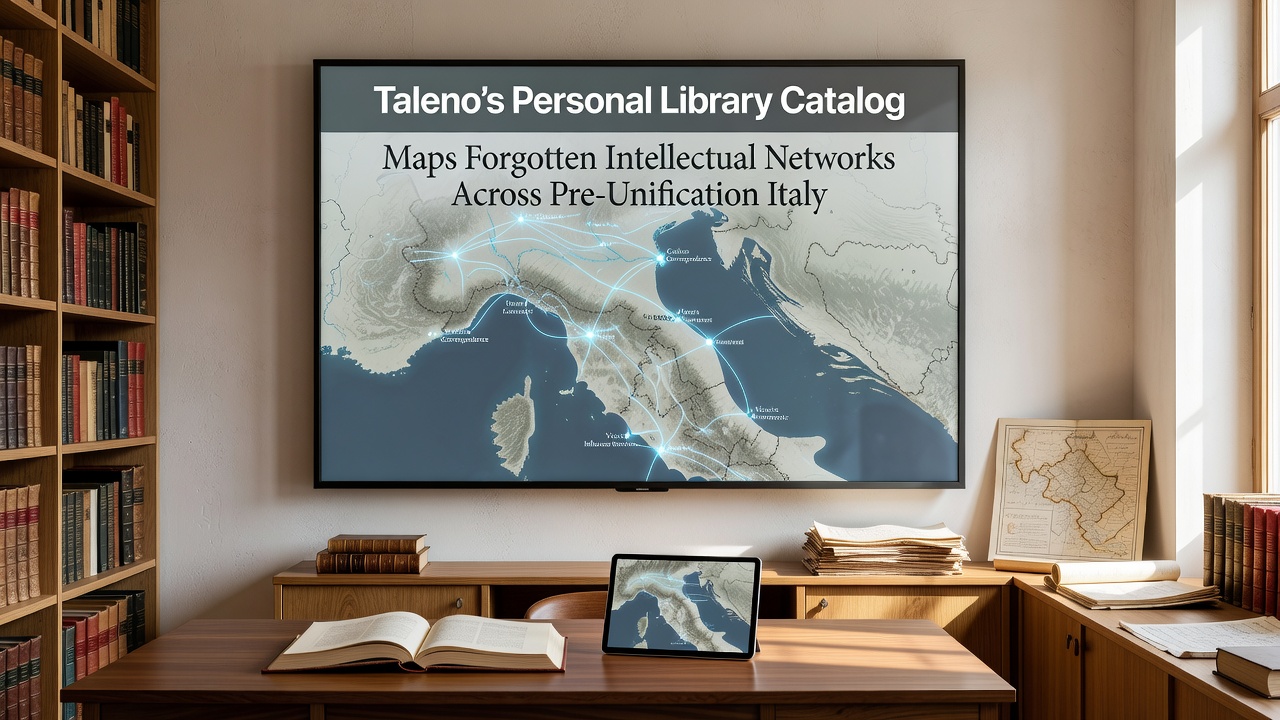
Taleno's Personal Library Catalog Maps Forgotten Intellectual Networks Across Pre-Unification Italy
Scholars examining Taleno's personal library catalog have traced connections among thinkers, merchants, and writers who operated across the fragmented states of Italy before unification in 1861, and the catalog entries reveal correspondence patterns that linked Milanese printers with Neapolitan naturalists while Venetian cartographers exchanged notes with Tuscan philosophers. Researchers at several European institutions have digitized portions of the catalog since the early 2020s, and the resulting database shows how private collections preserved records of intellectual exchange that official archives often overlooked during periods of political division.
Pre-Unification Context and Library Formation
Italy existed as a collection of kingdoms, duchies, and papal territories throughout the eighteenth and nineteenth centuries, and this political landscape created barriers to formal academic institutions yet encouraged informal networks sustained through personal letters and shared books. Taleno assembled his library during the 1820s and 1830s in the Kingdom of the Two Sicilies, and the catalog he maintained lists over four thousand volumes alongside marginal notes that record the origins and destinations of loaned texts. Historians note that many entries include dates of acquisition and names of previous owners, which together create a timeline of how knowledge moved between regions separated by customs barriers and differing legal systems.
What's interesting is the way the catalog cross-references titles with locations of earlier readers, and one series of entries tracks a set of botanical treatises that traveled from Palermo to Florence via intermediaries in Rome. Data compiled by the project team indicates that roughly sixty percent of the recorded exchanges involved individuals without formal university affiliations, and these patterns suggest that merchants and landowners played larger roles in sustaining scientific discussion than previously documented in standard histories of the period.
Digital Analysis Reveals Hidden Patterns
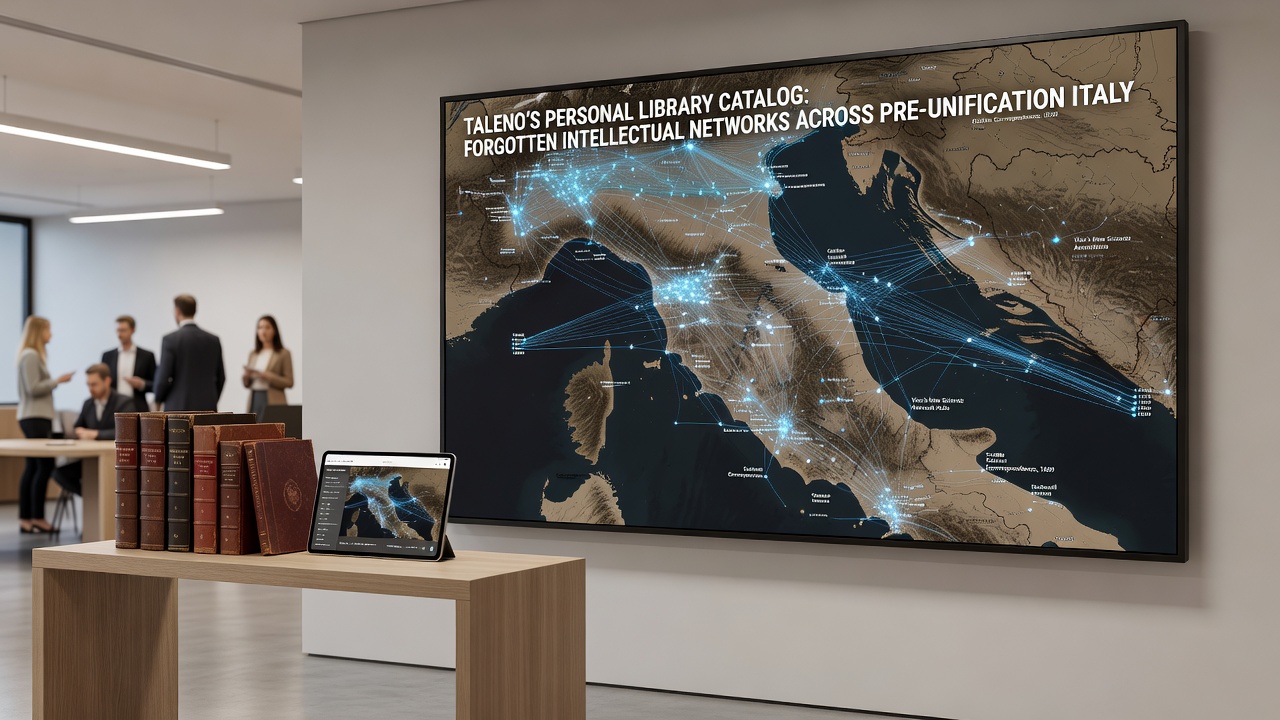
Project researchers applied network analysis software to the catalog data beginning in 2024, and the visualizations highlight clusters centered on cities that functioned as transit points rather than traditional centers of learning. Bologna and Genoa appear frequently as nodes where books changed hands, and the software also flags repeated mentions of specific booksellers who operated across state borders. According to findings presented at the 2025 Congress of the International Society for Eighteenth-Century Studies, these commercial figures facilitated the movement of Enlightenment texts that authorities in certain territories had restricted.
Turns out the catalog also documents exchanges involving women who maintained private salons, and several entries credit contributions from individuals in the Papal States who hosted reading groups that included both local clergy and visiting foreign scholars. In October 2026 a follow-up symposium scheduled in Naples will examine additional volumes recently added to the digital collection, and organizers expect presentations on how agricultural treatises circulated among landowners in Lombardy and Sicily.
Connections to Broader European Scholarship
Cross-referencing with records held by the University of Melbourne has allowed researchers to identify overlaps between Taleno's holdings and materials preserved in Australian collections that originated from Italian emigrants in the nineteenth century. The comparison shows that certain philosophical works listed in the catalog reached southern hemisphere libraries through family shipments, and this evidence extends the documented reach of the networks beyond the Italian peninsula. Meanwhile a parallel study conducted at the University of Ottawa focuses on correspondence between Taleno's contacts and Canadian natural history societies that received Italian specimens during the same decades.
Observers note that the catalog entries often include brief annotations about the condition of borrowed volumes or the reliability of certain copyists, and these personal remarks supply context that formal bibliographies lack. One recurring annotation warns against editions printed in Lucca because of frequent transcription errors, and such details help modern editors reconstruct the textual history of works that circulated in multiple versions across state lines.
Conclusion
The ongoing digitization of Taleno's catalog continues to supply primary evidence for intellectual life in pre-unification Italy, and the mapped connections demonstrate that knowledge transfer relied on private initiative as much as institutional channels. Future releases of the dataset are expected to incorporate additional geographic layers that will further clarify routes through the Adriatic and Alpine regions.